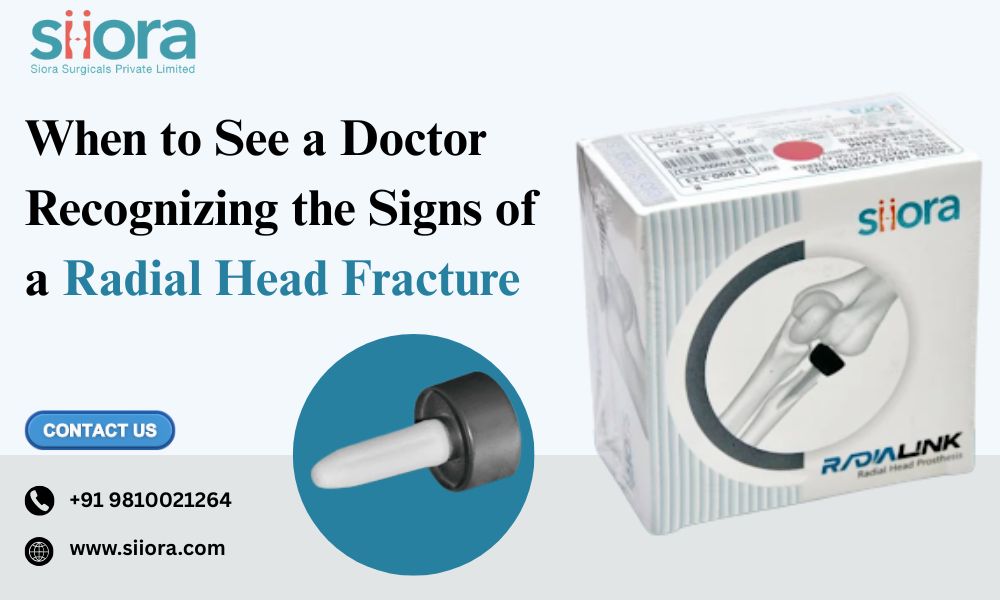
Radial head replacement is often the last resort when other treatments fail to restore elbow function following a radial head fracture. However, timely recognition and medical attention can prevent the condition from escalating to that point. If you’ve recently fallen on an outstretched arm or sustained trauma to the elbow, understanding the signs of a radial head fracture is crucial for seeking early and effective treatment.
The radial head is the top part of the radius bone, which meets the humerus (upper arm bone) at the elbow joint. Though it’s small, it plays a vital role in stabilizing the elbow and allowing a wide range of forearm motion. Injuries to this area are fairly common, especially among athletes, individuals who work in physically demanding environments, and the elderly.
What Are the Common Causes of Radial Head Fractures?
Most radial head fractures result from a fall onto an outstretched hand (commonly called a FOOSH injury), direct blows to the elbow, or high-impact trauma such as motor vehicle accidents. The force from the impact travels up through the forearm and concentrates at the radial head, leading to a fracture.
While some minor fractures can be treated conservatively, others may require surgical intervention. Knowing when to see a doctor is key to preventing long-term complications such as chronic pain, joint stiffness, or limited mobility.
Signs and Symptoms You Shouldn’t Ignore
Radial head fractures can sometimes be mistaken for a simple elbow sprain. Here are key signs that suggest a more serious injury that warrants medical attention:
- Persistent Pain
Pain located on the outer part of the elbow that does not subside with rest or over-the-counter pain medication may be a warning sign. The pain usually worsens when rotating the forearm or trying to straighten the arm.
- Swelling and Bruising
Swelling around the elbow and forearm, along with visible bruising, is another indicator. These symptoms often accompany soft tissue damage or internal bleeding due to the fracture.
- Limited Range of Motion
Difficulty in rotating the palm up or down (supination and pronation) or in fully extending or bending the elbow is a red flag. If you find your movement restricted beyond mild discomfort, it’s time to see a specialist.
- Grinding Sensation or Instability
Some patients report a grinding or catching feeling in the elbow, especially during movement. This could indicate that bone fragments are interfering with normal joint function.
- Visible Deformity or Numbness
Although not always present, a visible change in the elbow’s shape or numbness in the hand or fingers might suggest nerve involvement or severe displacement of the fracture. Immediate medical evaluation is critical in such cases.
Why Timely Diagnosis Matters?
Delaying treatment can lead to improper healing, resulting in chronic elbow instability, arthritis, or stiffness that may require more complex procedures later on. In some instances, untreated or improperly healed fractures necessitate radial head replacement surgery to restore joint function. This underscores the importance of seeing a doctor early, even if the symptoms appear manageable.
What to Expect at the Doctor’s Office?
When you visit a doctor for a suspected radial head fracture, they will likely begin with a physical examination followed by imaging tests such as an X-ray or, in more complex cases, a CT scan. The goal is to determine the type of fracture, whether it’s displaced, non-displaced, or involves multiple fragments.
Treatment may range from simple immobilization with a sling and physical therapy to surgical fixation using bone plates and screws. In cases where the bone is too damaged, radial head replacement may be considered to preserve elbow function.
Final Thoughts
Listening to your body and acting on the warning signs can make a significant difference in your recovery journey. If you’ve experienced trauma to your elbow and notice any persistent pain, swelling, or difficulty moving your arm, don’t brush it off. Seeking timely medical help can prevent complications and ensure your elbow regains its full strength and mobility. Remember, early diagnosis not only shortens the healing time but can also save you from invasive procedures down the line.
 Siora Surgicals Pvt. Ltd.